What is PHP?
PHP is one of the most versatile programming languages for websites and web applications in the world. Its wide range of features and extensions, easy access, and extensive community support have made PHP a favorite among both novice programmers and advanced software developers. What exactly are its characteristics?
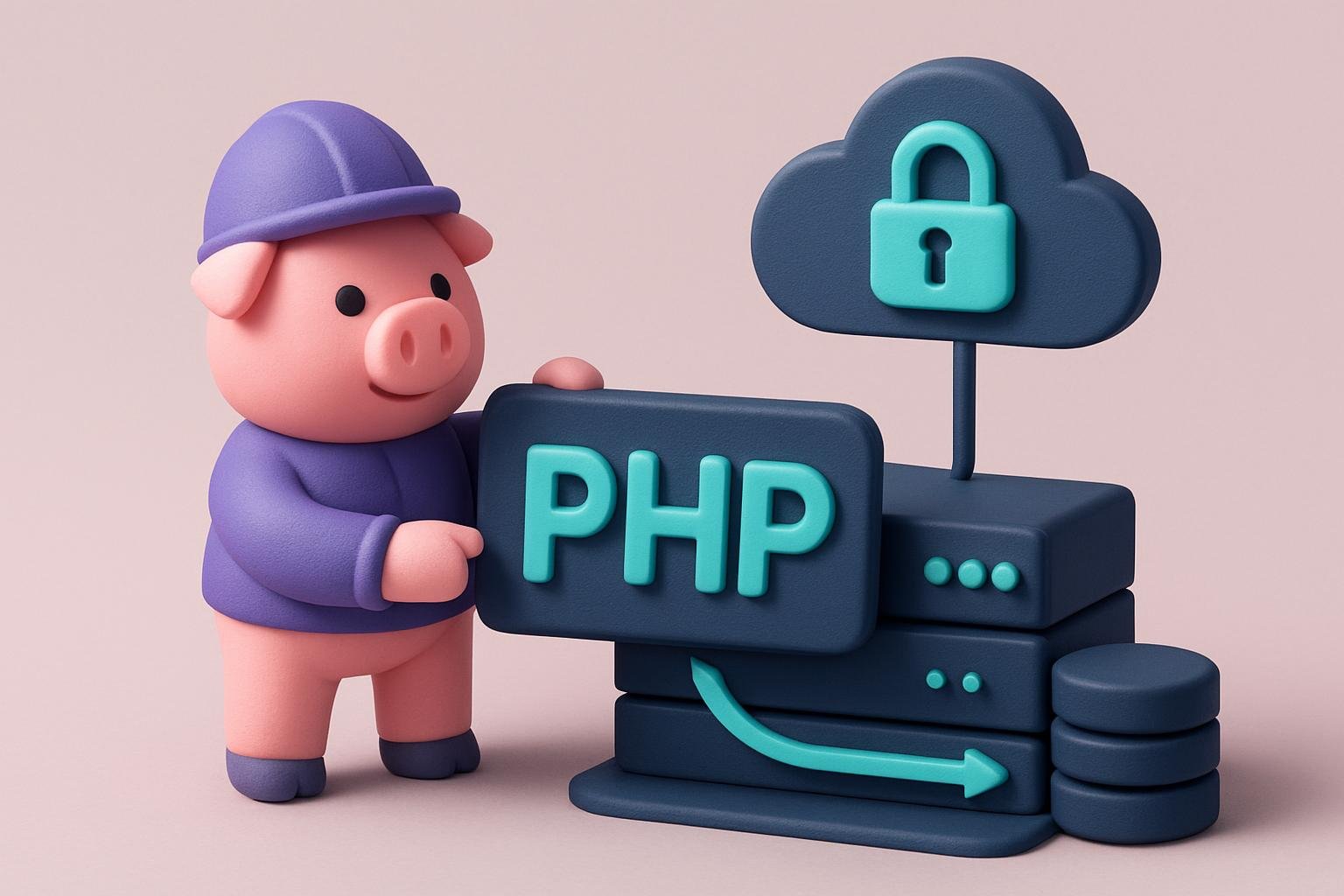
PHP is an abbreviation for Hypertext Preprocessor (formerly Personal Home Page). It is an interpreted scripting language used to create dynamic web pages and web applications. Since PHP is a backend language, it is most often used to write various features that transform static structures into dynamic websites—ones that can change in real time, with displayed content depending on their configuration (for example, because of the time zone or browser type).
It is also open-source software available under a free license. Anyone who wants to use it can do so completely free of charge—that is, download a copy, install it, and freely use its features (for both personal and commercial purposes). PHP provides full access to its source code, so programmers with the appropriate skills can modify it and send their suggestions for changes to the developers who maintain it. This keeps the code evolving dynamically, while the project's official version is curated by Zend, the company founded by PHP's creators. In addition, it is efficient, easy to learn, and simple to implement. That's why almost 80% of all websites use PHP!
The history of PHP
The history of PHP dates back to the 1990s, when Rasmus Lerdorf (a Danish programmer) first developed a set of Perl scripts. They were intended to monitor users visiting his website. When traffic increased significantly, Lerdorf rewrote the scripts in C, and shortly afterward (in 1995) decided to make his source code publicly available to other programmers. It was then combined with the Form Interpreter tool (also created by Lerdorf), giving rise to the first version of the PHP/FI language. The potential of this solution was quickly recognized, and an active group of people from the programming community rallied around it to support its further development.
Two new updates came out before 1997, but the real breakthrough was the work of two Israeli programmers—Zeev Suraski and Andi Gutmans. They rewrote the existing code and gave it a new architecture, creating another, significantly improved version—PHP 3.0. It was not only more efficient, but, most importantly, it was modular and had object-oriented programming built in.
However, an even newer PHP 4.0 update, based on a new scripting language engine called Zend Engine, was a major milestone in the language's development. Since then, the code has been continually developed and improved. By 2022, several more versions had been released, the latest of which is PHP 8.1.4 (17 March 2022).
A server-side scripting language. How does PHP work?
First, PHP is a scripting language. It is used to automate certain processes that would otherwise have to be carried out step by step every time your website's code runs. More precisely, scripts are text files containing PHP instructions that tell the computer to perform various actions without manually reloading the page—for example, opening dialog boxes or starting an animation in response to a specific user action, or saving certain data to databases. However, since browsers do not understand PHP scripts, they are usually embedded in another language—for example, as blocks of HTML code separated by tags.
In addition, PHP is what's known as a server-side language, meaning that it runs on the server. This means that before anything reaches your computer's browser, it is first processed and checked on a web server. Unlike client-side software, the server side cannot manipulate user data—all key operations and calculations are controlled (or should be controlled) by code locked away on the server, which the user cannot access.
What exactly does the server-side process look like?
- You enter a website address in your browser window.
- Your request to view the page is sent to a server, which checks whether a .php file is associated with it.
- If so, it is passed to the PHP interpreter, which processes the file—looks for so-called PHP snippets in its contents, translates the code, checks the request against the database, and replaces it with the result of the execution.
- As a result, the interpreter sends the requested output to the server in the form of generated HTML code, which is then sent to your web browser.
The target page opens on your computer.
What is PHP used for?
The range of possible uses for PHP is truly vast. It can be used to create dynamic and interactive websites, as well as applications, business tools, and e-commerce platforms. It is also great for various web tasks—from sending email and collecting web forms to accessing and modifying cookies.
Since PHP can store, delete, and modify information in a database, it also provides a solid foundation for creating content management systems (CMS), online stores, customer relationship management systems (CRM), and even social networking sites.
You should know this
Some of the world's largest and most popular websites are written in PHP! They include:
- Wikipedia,
- Tumblr,
- Slack,
- WordPress,
- Magento,
- Yahoo!,
- Canva,
- Spotify,
- BlaBlaCar.
PHP and WordPress
Most CMS platforms available today are based on PHP. Besides the best-known one, WordPress, this group also includes Drupal and Joomla. However, the former has clearly dominated the website market—almost 80% of websites run on it. Why does it matter that WordPress was built with PHP?
If you have your own website and plan to adapt it to your needs (for example, by creating custom solutions or special extensions for it), you'll have to do so using code in this language. It is also important to update PHP to the latest version so that your site works better, faster, and, above all, more securely.
7 advantages of PHP. Why should you build your business on it?
PHP's popularity is undoubtedly due to its many features and advantages. If you're still not sure whether to build your website or application using its code, discover seven benefits you can get!
1. Cost-effectiveness
PHP is an open-source language, which means you can use and implement it for free. This means you won't incur additional costs associated with purchasing expensive licenses or software.
2. Stability and active community support
PHP has a huge international community of supporters that continually improves its features, as well as an impressive collection of resources and capabilities. Hundreds of PHP-based solutions have already been tested, so there is no need to invest resources in reinventing them. What's more, PHP has been around since 1995 and continues to evolve. Improved versions are released regularly, reducing the possibility of errors.
3. Time savings
PHP supports object-oriented programming, which allows code to be reused. PHP components can be reused, saving developers a lot of time and effort during development.
PHP also has many well-known and respected frameworks, such as Laravel, Symfony, and CodeIgniter. Each has its own features and offers fast and secure development in specific areas.
PHP was specifically optimized for quickly developing various websites and web applications. For a business, this means your IT product (or service) will take less time and money to develop, so you can achieve a return on investment much sooner than with other languages.
4. Broad compatibility
A major advantage of PHP is its versatility. First, it is supported by various operating systems, such as Windows, Unix, Linux, MacOS, and so on. This makes it possible to create cross-platform applications without worrying about compatibility errors.
In addition, one of its strongest and most important features is support for more than 20 types of databases (for example, MySQL, MongoDB, PostgreSQL) and most servers, including Apache, Microsoft IIS, Netscape, iPlanet, Caudium, Xitami, and Tornado.
5. Scalability
When creating a website or web application, plans usually include developing it in the future and serving an increasing number of users. Thanks to PHP, you can easily expand projects with additional features that meet the business's current needs at each stage.
6. Clear documentation
PHP code is clear and well documented, making it easy and quick to study and understand. This is especially important if you need to change the programmer or the entire team working on a particular website or application.
7. Easy maintenance
PHP application code can be freely modified and changed to suit current needs or business requirements. Its flexibility lets you make changes to functionality at any point during a project, even after it is complete. Because PHP is written consistently, any team of programmers can provide maintenance and support for a project based on it—not necessarily the team responsible for creating it.
The future of PHP—is it worth choosing?
Despite the passage of time, PHP remains one of the undisputed leading programming languages. Most websites are built on it, and its best-known CMS (WordPress) continues to grow in popularity. PHP is a reliable and secure language that is constantly being expanded and developed to adapt to the new digital reality. That's why its near future looks bright.
If you're looking for reliable technology solutions for your business, PHP offers unparalleled opportunities in this area. With it, you can carry out various types of IT projects—feature-rich websites, corporate websites, or web applications.