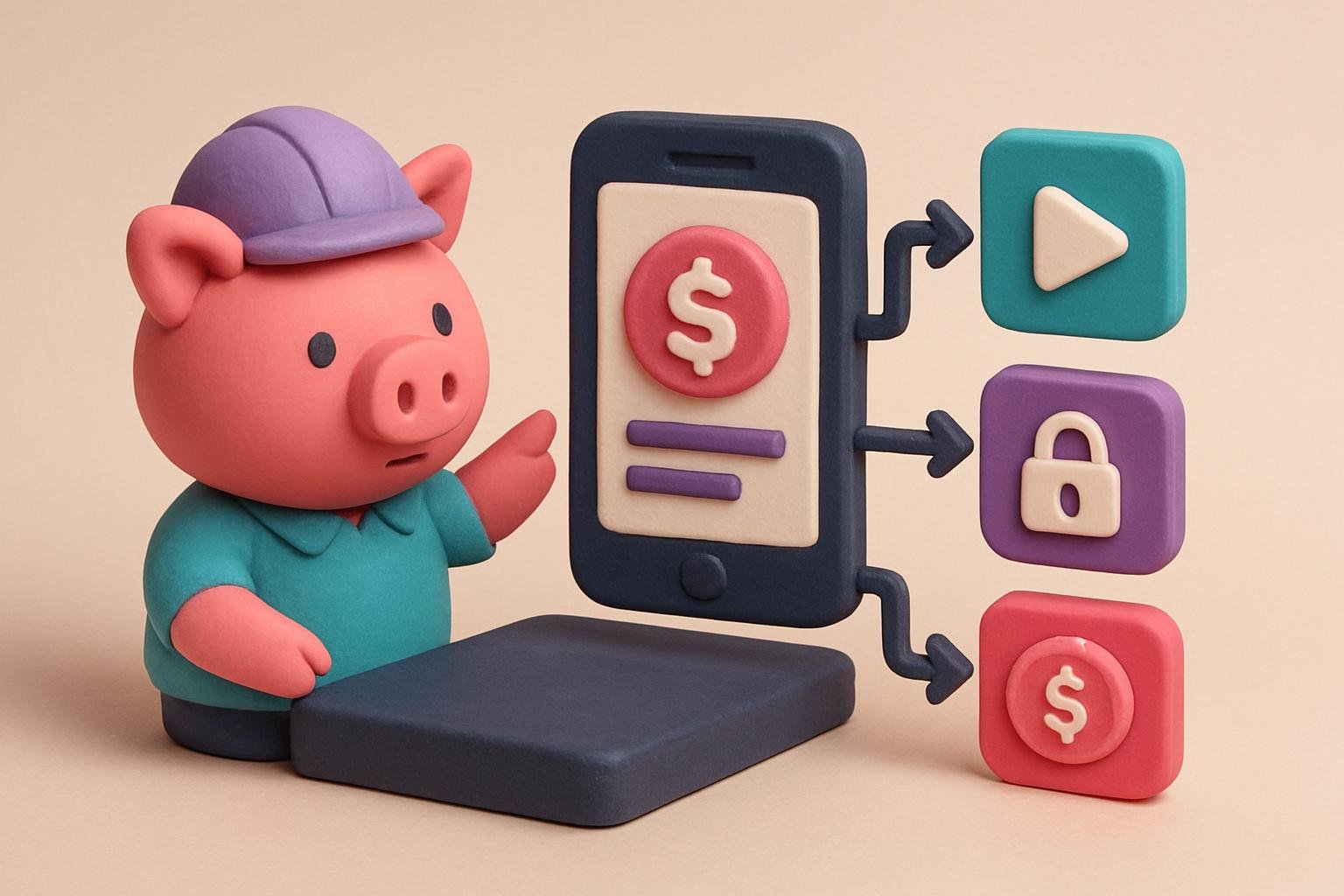
This article will be useful to those who are already thinking about developing an app, or considering possible ways to monetize it. Although monetization methods evolve along with the mobile market, there are a number of proven strategies that have already shown their effectiveness for millions of apps. Let’s take a look at some of them.
All apps can be divided into three types:
Free
When it’s free to download and use.
Freemium, or so-called freemium
When it’s usually free to download, but accessing more features requires a subscription or a one-time payment.
Paid
When the download can only be completed after payment.
With paid apps, it’s perfectly clear: the company makes a profit every time the app is downloaded from the store. Free and freemium products have their own ways of monetizing.
Strategy 1 In-app advertising
There are several ways to integrate ads into an app:
- Banner ads that cover certain parts of the screen.
- Full-screen ads that cover the entire screen.
- Native ads, which are mostly hidden within the content and often indistinguishable.
- Video ads.
- Interactive and playable ads.
At first glance, all these types of advertising may seem equally effective for monetization, but be careful — their intrusiveness may put users off using your product.
How it works: your goal is to attract as many users as possible, then sell ad space in the app.
Strategy 2 Freemium — try before you buy
This is a common monetization model, offering a set of basic features for free, with the option to expand functionality after paying.
How it works: Your goal is to interest users, turn them into devoted fans of your product, and thereby convince them to eventually purchase the full version. This model is gentler than an in-app advertising strategy. It’s important for your product to stand out from the competition in some way — whether through a unique set of features, better quality, or a lower price.
Strategy 3 In-app Purchases
This strategy is actually the most widely used in the app development segment. Developers can benefit from users buying premium features, virtual currency, or new levels in a game.
Strategy 4 Lead generation
The developer makes a profit every time a user takes an action after clicking a link inside your app.
Strategy 5 Mixed monetization model
Of course, you can — and often should — combine all the methods listed above. In any case, it’s worth relying on quality analytics. Thoughtlessly copying your competitors is always risky — it’s better to take their methods into account and adapt them to suit you.
To sum up
Before implementing one of these strategies, it’s worth asking yourself the following key questions: What problem does your app solve, how exactly does it solve it, and for which audience? How is it different from its competitors — why will users use it, and why will they pay for it?
What to pay attention to
Your app may be exceptionally useful or even offer the best option on the market. However, competition in the stores is so fierce that even the most appealing apps often go unnoticed. The only way to avoid this risk is to put enough effort into promoting your software. Even the best app can fail without proper marketing.
There are several key strategies you can use to promote a mobile app:
- ASO - SEO optimization in storage closets;
- Incentivized traffic;
- SMM;
- Paid app promotion in stores and on third-party platforms;
- app website promotion;