A comparison of frontend and backend
First and foremost, as a language for frontend development, it became the foundation for powerful frameworks and libraries such as Angular, Vue, and others. React also has a place on this list. It’s a jаvascript-based library for building awesome user interfaces. In 2009, it broke through the outer limits.
With the launch of the Node.js platform, software developers got the ability to use jаvascript command-line tools to build the server-side, or backend, of web applications.
ReactJS or Node.js?
Difference: they’re two sides of the same coin.
Node.js lets you build an application's backend, while ReactJS is used to develop its user interface.
React.js
Devs use React to build user interfaces and everything users can see when they open a website or web app. Created in response to existing frustrations with UI development, React has caught the attention of millions of engineers around the world.
React is a Facebook product. When it became necessary to update the web version of Instagram, Facebook engineers proposed a new, reliable jаvascript framework for UI development. Now, thanks to this powerful tool, world-famous websites like Instagram and Facebook can show off an impressive interface.
Companies create open-source React tools so everyone can use them in their startups. React lets you build both multipage and single-page apps, launch interfaces, frontend parts for well-established websites, and so on.
You build the web part, reuse some of the codebase for React Native apps, and significantly speed up the MVP development process. As a result, your app’s interface will look great in any browser and on any device.
React has a rich ecosystem where software engineers can find tools and plugins for practically any task. No need to waste precious time reinventing the wheel — it’s all there in the framework.
An active developer community spends a lot of time and effort making the framework flawless. The contributors now include more than just the Facebook team: many experienced engineers around the world have joined forces to update React.
There are usually several minor version updates each year.
Node.js
Compared to React, Node.js is a lib for backend development. With this lib, you can build the data access layer — the part users don’t see, but which is responsible for all your website’s functionality.
How did the story of Node.js development begin?
Ryan Dahl, the tool’s creator, was working with Ruby, a programming language for backend development. He noticed some limitations when handling a large number of simultaneous connections and wondered how to fix them.
And the idea really was cool. Unlike JS and its other frameworks, Node.js is a whole environment that lets you run JS code outside the browser. With it, you can build the backend of a website, online store, or marketplace. You can develop APIs for web and mobile apps, and also use it to add advanced backend features to an existing software product.
Node.js is a good fit for both promising startups and well-established businesses. Built on Google’s V8 jаvascript engine and C++, it’s a high-performance, fast platform.
Node.js puts the idea of asynchronous database requests into practice. It handles requests in an event loop. Unlike similar web technologies, where each new request creates a new thread in the code, Node.js lets you run single-threaded web apps. This makes installing, configuring, and using the app much faster and easier. When you build an app’s backend with
Node.js, you follow the “jаvascript everywhere” principle.
That means the whole app is built in one JS language, but with different frameworks. Node.js assigns codenames to long-term support releases. They’re named after chemical elements.
For example, the current Node.js versions 13 and 14 are known as Fermium.
Can you use Node.js and React in the same project?
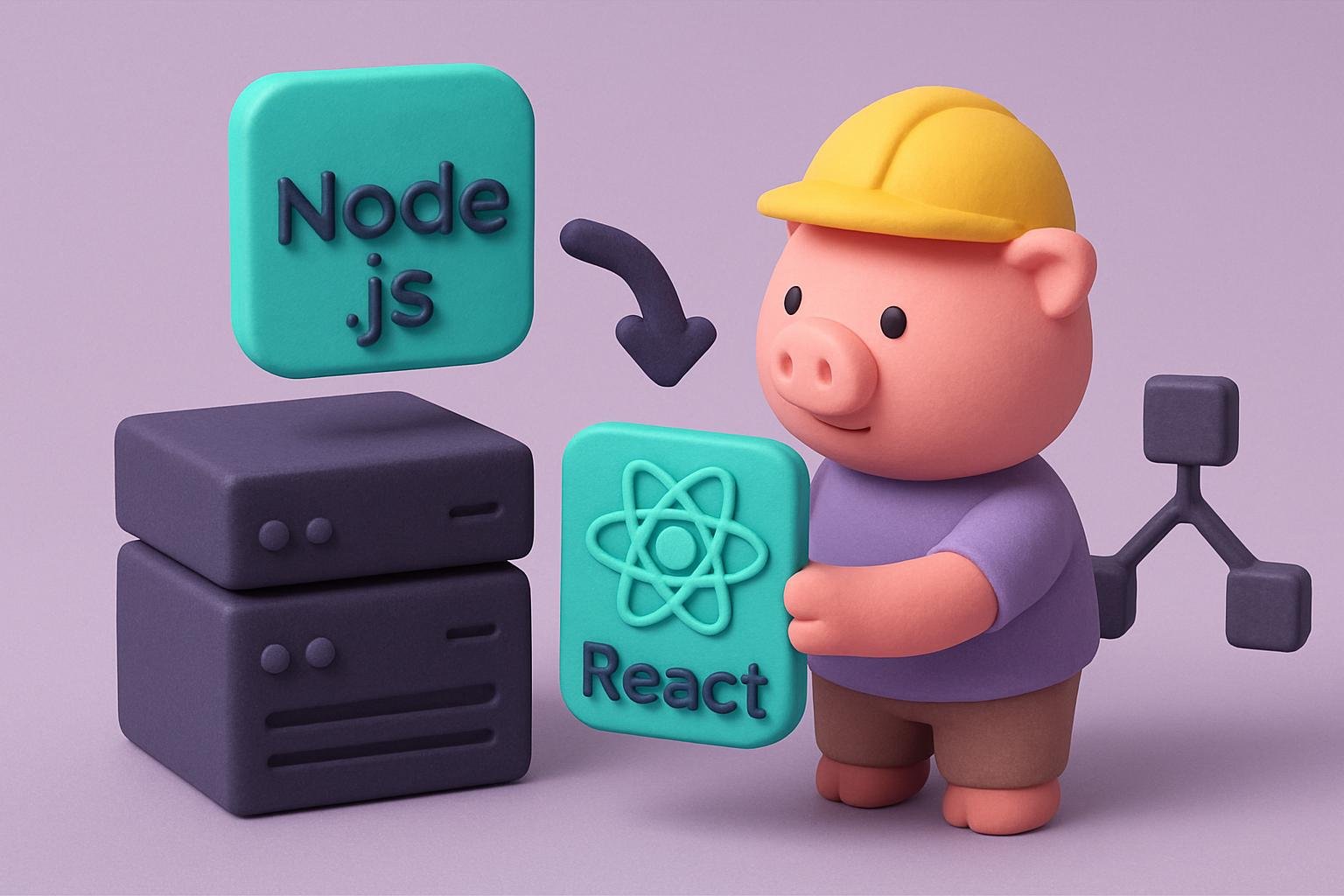
The answer is yes. You can mix Nodejs and React to get a powerful web solution.
Nodejs is the ideal backend platform for running your React app’s user interface. We’re not going to dive into the technical details or paste a few lines of code here. But we do have a short, clear answer to why
Node.js and ReactJS work so well together
Universal JS app:
- Node js and React are jаvascript solutions, so the development process is easier for engineers;
Improved code compilation: Node bundles the React app into a single file, making code compilation easier;
Code execution:
- React code runs directly in the Node.js environment;
Server-side rendering:
- React has components designed exclusively to work with Node.js, reducing the number of lines of code and speeding up rendering;
High performance:
- Node.js can handle massive numbers of requests. Combining Node.js and React lets us minimize app response time and deliver fantastic performance.
Node.js and React.JS: stack options
These frameworks are parts of the MERN stack, which includes:
- MongoDB — a NoSQL database;
- Express.js, or Express — a modular web framework used with Node.js;
- React — a frontend framework;
- Node.js. - a backend framework for development.
The MERN stack in app development
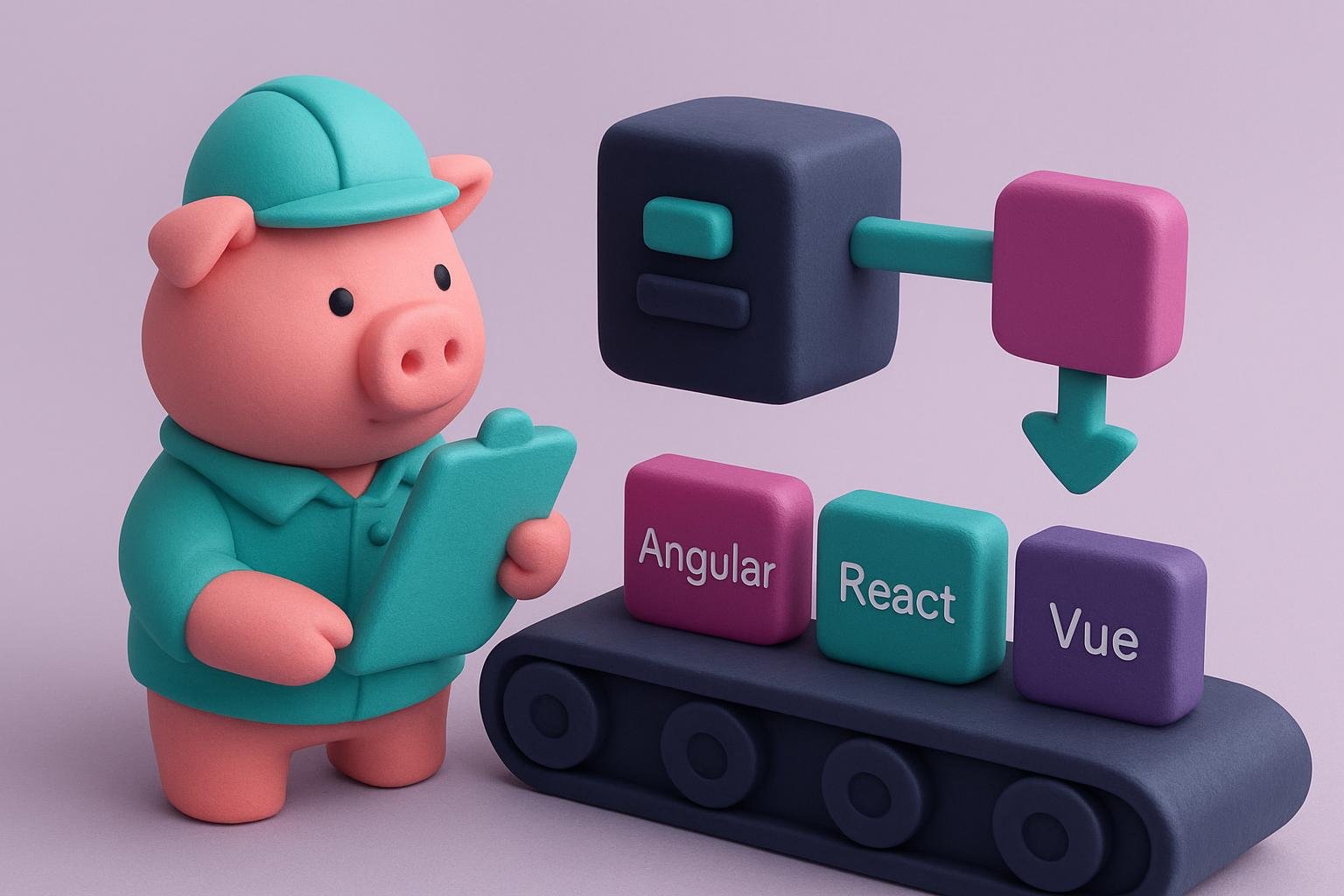
Depending on your team’s experience and expertise, you can use some alternatives to React. The most common are Angular and Vue. As a result, you can work with the MEAN or MEVN stack, respectively.
With a quality MVP that has basic functionality, you can bring your idea to life quickly, collect user feedback, and attract your first investors. After that, the process repeats: you put money into your business — update the app — get even more investment.
Let’s sum up
React lets you build an app’s frontend, while Node.js is a tool for backend development. They both have substantial, skilled communities and rich ecosystems, and they do a great job serving thousands and millions of apps across the Internet. You can use both and build awesome software products for any industry.