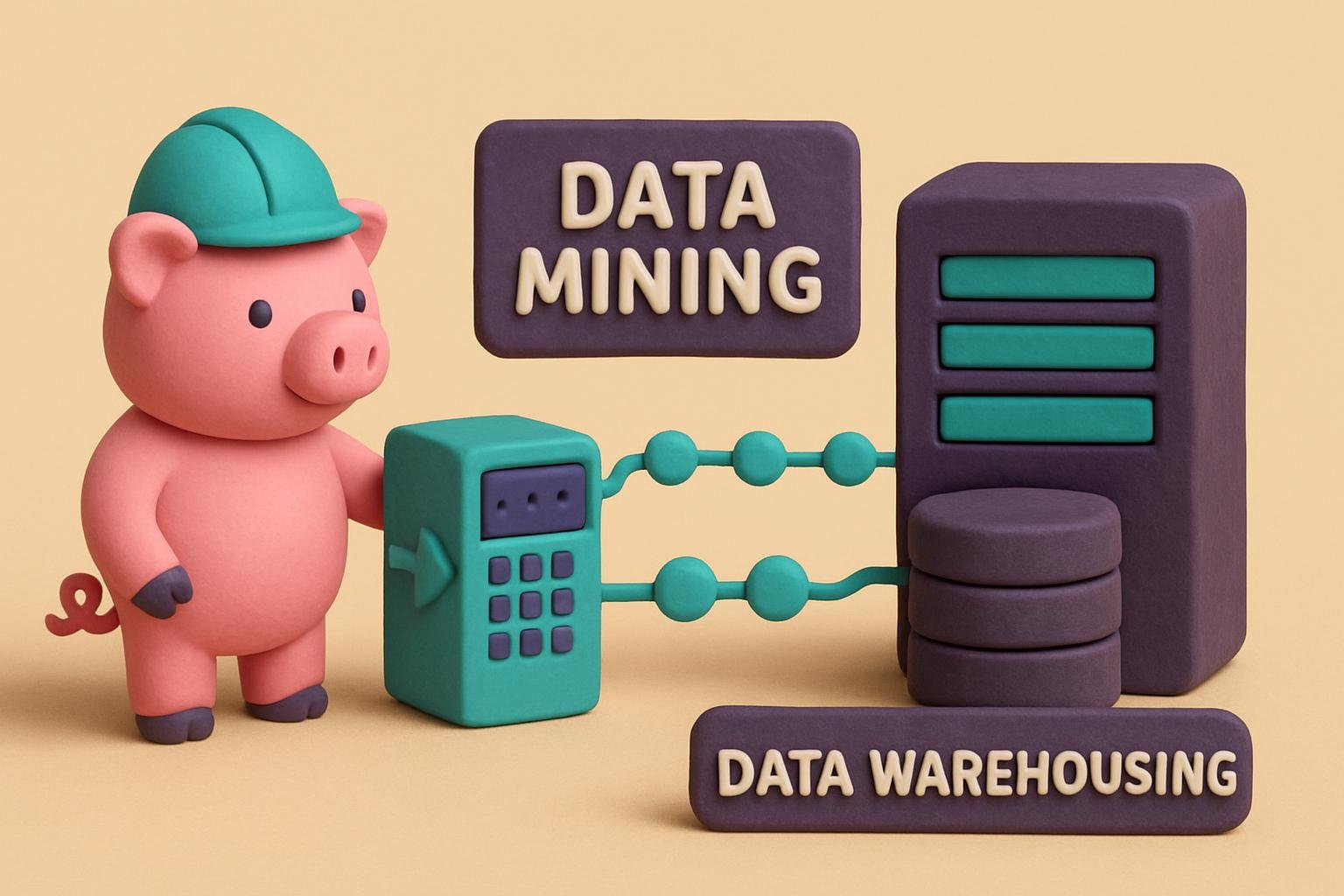
Data mining and data warehousing are considered part of data analysis. But they work differently. Let’s look at the differences between them and whether one can exist without the other.
Data Mining
Data mining involves examining large datasets and looking for patterns. It is a subset of data science used in various fields, including marketing, finance, and engineering. Data mining can be done manually or using an automated system. There are open-source software platforms that let you store, access, and manage data.
Although machine learning algorithms are complex, deploying a model is a simpler process than training an algorithm. Model deployment involves processes such as converting the model to another format and loading it onto the intended computer.
Many popular machine learning algorithms use transfer learning. This means you can deploy a model in any system. Continuous deployment allows a device to relearn the pattern and its structure for each new pattern.
More and more industries are finding ways to use data mining features. Data mining consists of three stages:
- data preparation,
- model building,
- validation,
- deployment.
These features let you collect and analyze information to make better decisions and policies.
Some companies record and analyze user information, while others use data mining features to analyze trends. For example, some companies may decide to get data from their users to determine which products they should sell.
By collecting data and analyzing trends, they can see which products are popular and make more of them, ensuring they meet their customers’ needs. Data mining features are a great way to collect and analyze data.
Data Warehousing
A data warehouse is a place to store data so that more people can access, share, and use it. Data warehouses are based on relational database management systems (RDBMS). It is designed to structure data into tables and make it easier for users to query them.
A data warehouse stores all of your company’s important business information. For example, customer names and addresses, information about every order they place, or sales data by month.
Google Search Console is a good example. It lets you analyze your website’s performance across several parameters. These parameters include traffic sources, user behavior patterns, and so on.
An RDBMS tracks all changes in every row of your tables. If you make a change or insert a new record into one of these tables, all the other copies will automatically reflect those changes.
There are three main types of data warehouses, each serving its own purpose:
- Data marts are used by sales and marketing departments to collect data from sources such as customers and reviewers.
- Enterprise data warehouses are centralized databases that bring together all departments in an organization. They are the core of decision support systems.
- Operational data stores contain user data and are updated frequently. They serve employees.
The Difference Between Them
Data Mining
- Use data mining to find specific data by examining records and trends
- Data mining gives you the ability to make smart decisions quickly
- It’s a great way to find answers to business questions that used to be difficult to solve.
- It can also be used for predictive analysis and forecasting.
- The models aren’t very accurate. They may not see the data the same way a person does
- The large time investment in data mining can be explained by the fact that the process consists of many stages.
- You can access any data in the dataset at any time.
- You can perform advanced analysis using various visualization tools and Python libraries.
Data Warehousing
- Reduce the need to re-enter data by creating an efficient and accurate data warehouse that all departments in the company can use.
- Create a central data repository that is secure, reliable, scalable, and accessible to everyone.
- It provides information in a structured, easily accessible, maintainable, and updatable format.
- Create a data warehouse tailored to your business needs that helps you manage data efficiently
- The more data, the higher the storage cost. This can be a problem when a company has more data than it can store.
- Processing speeds in data warehouses are low. Storing data in a warehouse significantly slows down access times
- Only summary tables are available in a data warehouse, not detailed data. This is a problem if you want to analyze precise data rather than just summary data.
- Advanced data analysis is not possible in a data warehouse because the information is no longer available in its original state.
In conclusion:
In both cases, you need to store your information so that other people who need access to it can get to it (or if you work alone or trust no one).
Time requirements are also related to having large volumes of data. This leads to model complexity, since the model must be able to process all the data. Both data mining and data warehousing can help organizations improve their efficiency and effectiveness.