Alibaba has opened Qwen4-Max-Preview—the first model of the Qwen4 generation—for testing through the QwenCloud API with a Token Plan subscription. The practical wrinkle matters more than the flashy name: there’s no familiar per-token billing, so you’ll first have to figure out the subscription credits. Oink, and this is a preview with a short access window, not a promise of a permanent API.
According to information published on 13 November 2026, the model is available from 11 until the end of 25 November Beijing time—until 19:00 Moscow time. After that, QwenCloud says it will shut down this version specifically, but doesn’t say what will replace it. Early access has also opened in QwenWork, Qoder, the Qwen app, and QwenStudio.
What’s known about the model
Alibaba describes Qwen4-Max as a multimodal flagship model: it generates text, accepts images and video, and reasons by default before responding. It also claims support for function calling, web search, built-in tools, and structured output using JSON Schema. The documentation specifies a context of 1 million tokens and a maximum output of 393 216 tokens. The latter figure includes both reasoning and the final answer, not just the text the user sees.
The reasoning level is set by the parameter reasoning_effort; доступні значення low, medium і xhigh, with xhigh set by default. The model ID is qwen4-max-preview, and it appears on invoices under the name qwen4.0-max-preview. It’s a small thing, but in a technical pigsty, the difference between the name used in a request and the name on the bill can easily send you hunting for a bug that doesn’t exist.
Alibaba talks about deeper knowledge, broader understanding of the world, and better programming and agent skills. However, the announcement contains no benchmark results, model size, or numerical comparisons. Oink, so for now we have documentation specs and marketing claims, but no official test table that would let us assess its advantage over other models.
What to change in your integration
Qwen4-Max-Preview is compatible with OpenAI Chat Completions, OpenAI Responses, and Anthropic Messages. So you can connect it to tools like Claude Code, Codex, Cursor, and Qwen Code, provided the client lets you set a custom API address and key. Token Plan uses a separate endpoint token-plan.maas.qwencloudapi.com and keys with the prefix sk-sp-; звичайний ключ API QwenCloud тут не підходить. Для роботи потрібні адреса, ключ і ідентифікатор моделі відповідно до інструкції конкретного клієнта.
There’s also a wrinkle for code that limits response length. For qwen4-max-preview the parameter max_tokens in the OpenAI Chat Completions-compatible interface works as max_completion_tokens: the limit is shared between reasoning and the final answer. If you leave a budget sized only for the visible text, some of it will go to reasoning, and the response may get cut off. According to the documentation, older Qwen models retain their previous behavior.
To control reasoning depth, use reasoning_effort; передавати його одночасно з thinking_budget is not allowed. In multi-turn conversations through Chat Completions, preserve_thinkingmode is active by default. Previous assistant reasoning must be returned in the reasoning_contentfield, rather than concatenated with content. Don’t take your hooves off the keyboard here: when switching over, check both the generation limit and how the client stores reasoning history.
How much Token Plan costs
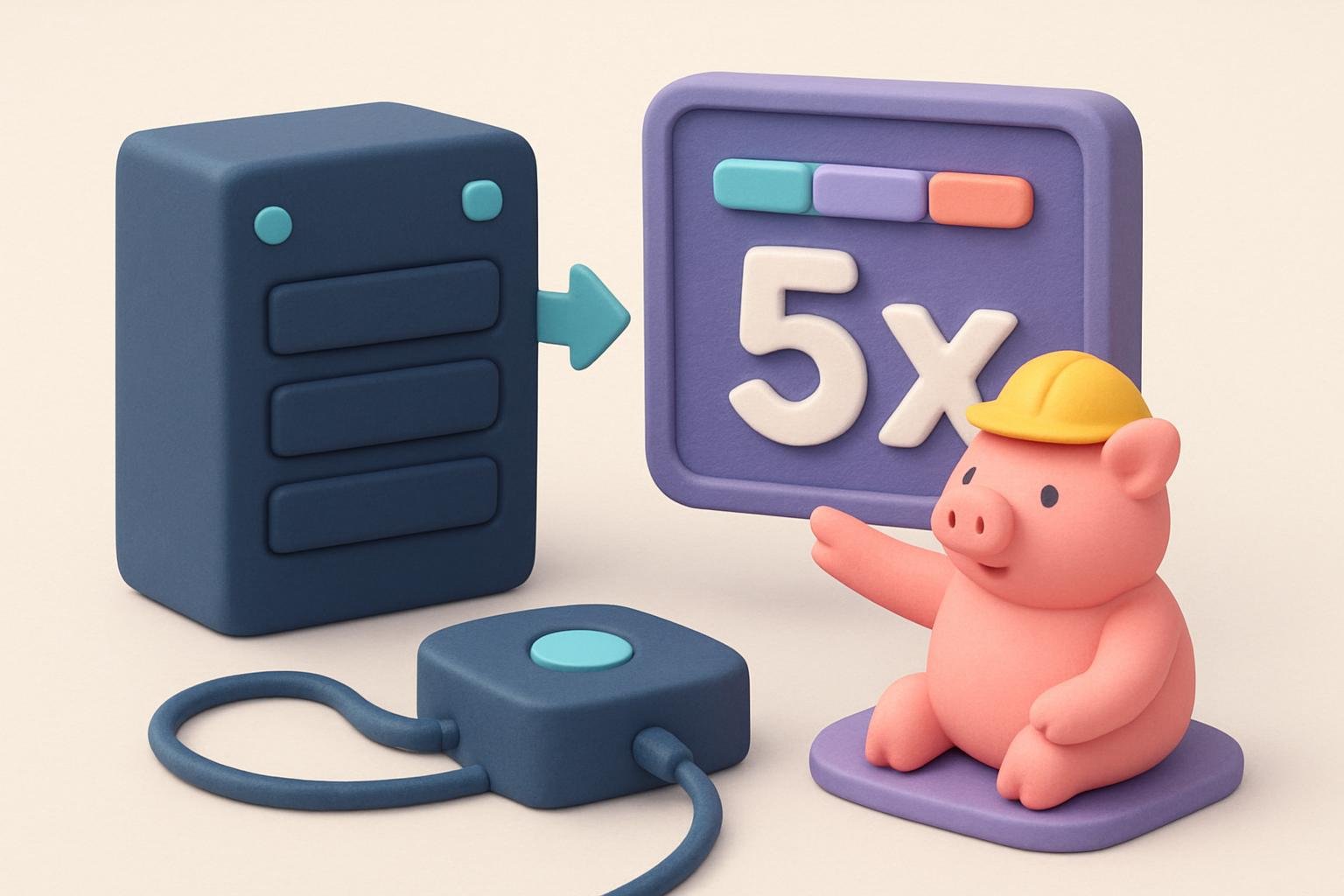
Token Plan is a monthly QwenCloud subscription for interactive work with models in tools and agent environments. It uses shared credits across a range of models, which, according to the service description, includes GLM-5.3, DeepSeek-V4, and V4.1, as well as image and video generators. Qwen4-Max-Preview also uses credits, but during the preview it costs 20% of the regular rate. That means the same credit balance may last roughly five times longer for identical requests, although the exact usage depends on tokens, reasoning mode, and tool use.
| Plan | Monthly price | Promotional price for new users | Credits per month | Agents at a time |
|---|---|---|---|---|
| Lite | $6 | $3 | 20 000 | 1–2 |
| Essential | $10 | $5 | 45 000 | 2–3 |
| Standard | $18 | None | 80 000 | 3–4 |
| Pro | $43 | None | 200 000 | 6–8 |
Promotional prices for Lite and Essential are available until the end of 30 November Beijing time and are intended for accounts that have not previously purchased an individual Token Plan. Additional bundles of 20 000 credits can be purchased for $15; up to five such bundles may be held at once. Credits are monthly and do not roll over to the next period, and an individual subscription cannot be canceled. QwenCloud removed the weekly limit on 22 September and increased the monthly quotas for all four plans on 9 November 2026.
From 22:00 to 08:00 Beijing time—from 17:00 to 03:00 Moscow time—an additional 60% discount applies. According to the documentation, during this window a preview request costs 8% of the regular rate. QwenCloud doesn’t list the absolute price of a single request: actual usage can be seen after the request in the Model usage section. Oink, you can’t calculate the bill here just by counting requests: context length, reasoning, and tool calls matter too.
What you can’t use the subscription for
The individual Token Plan is intended for interactive work in development tools and agent clients. Automation scripts, backends for your own apps, and batch requests are prohibited; using it this way may get your key blocked. You can set up the key on several of your own devices, but you’re not allowed to share it with other people. The subscription is available only in the Singapore region, and inference runs in Global mode, meaning requests and responses are transmitted across borders. If a tool doesn’t support the standard OpenAI or Anthropic APIs, you won’t be able to use Token Plan with it.
Open weights and future access
As of 13 November, Alibaba has not announced the release of Qwen4 weights. Qwen4 was not listed among Qwen models on Hugging Face or on OpenRouter; repositories with that name that have already appeared on Hugging Face were created by third-party authors, not the Qwen team. The official Qwen blog has also published nothing about Qwen4. So don’t treat a third-party repository name as confirmation of an official release.
The situation was different for the previous generation: alongside Qwen3.8-Max, Alibaba released a Max-class model, and on 8 August, the weights for Qwen3.8-2.4T-A95B, on which it is based, appeared on Hugging Face. For Qwen4-Max-Preview, the company has only said that the preview will be shut down after 25 November. Whether there will be a next version, a permanent API with per-token billing, or open weights is still unknown.
If you need a practical test on your own tasks, the lowest listed entry point is Lite at $3 for new users. But the testing window is short, and Alibaba has published no benchmarks, so you’ll have to evaluate the model on your own scenarios. PigOps approves of a cautious plan: first check client compatibility and credit accounting, then move your workflow to a model that’s due to be shut down after the preview ends.